
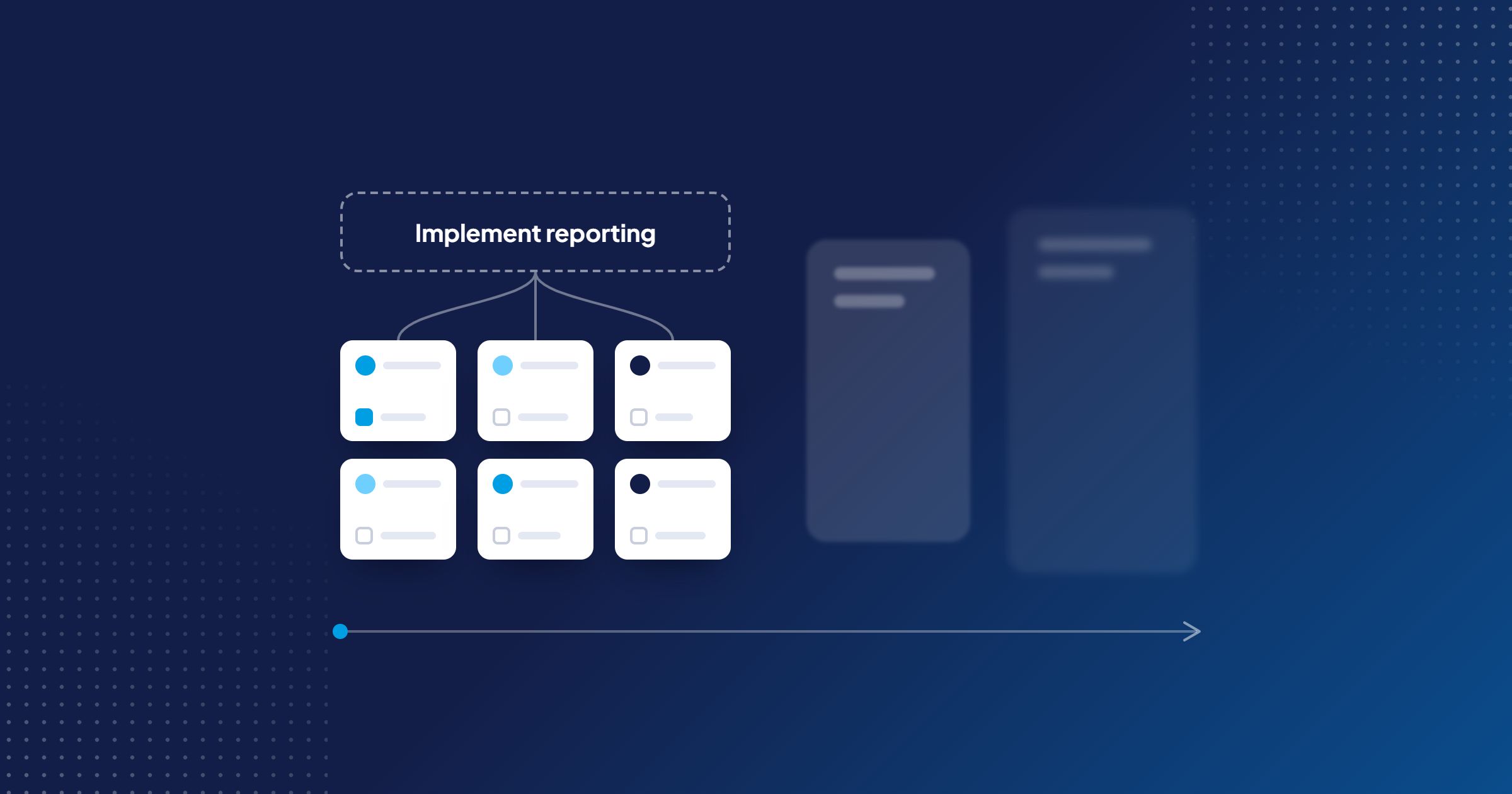
It is Monday morning and you are reviewing two project plans before a steering meeting. The first has a single line: “Implement reporting, 10 days, Thabo.” The second, from a colleague on a similar engagement, has 412 rows, including “Open report template” and “Save file”. Neither plan tells you what you actually need to know: whether the reporting work will be ready for the client’s month-end, and what might stop it.
That is the real question behind how detailed project tasks should be. Too little detail hides risk. Too much detail hides it too, under administration nobody maintains.
How detailed should project tasks be?
Break a piece of work down until one owner can state the next action, show what “finished” looks like, and name what the work depends on. Plan the next few weeks at that level and keep later work broader until you know more. More rows do not produce a better forecast; clearer ownership, evidence and dependencies do.
Deliverables, work packages, tasks and milestones
Much confusion about task detail comes from mixing kinds of plan item. APM distinguishes a product breakdown structure, which shows the deliverables, from a work breakdown structure, which shows the work required to produce them. Keep them apart.
| Item | What it is | Example |
|---|---|---|
| Deliverable | An output the client receives or accepts | Monthly finance dashboard |
| Work package | A group of related work with one accountable owner | Dashboard build and validation |
| Task | A specific piece of work one person or pair can carry out | Reconcile invoice totals against the ledger for March |
| Milestone | A point marking something achieved, with no effort of its own | Finance lead approves dashboard definitions |
If a task does not contribute to a deliverable, a decision or an acceptance step, question why it is on the plan.
Six tests for the right level of task detail
Apply these to any task in the next planning window. If a task fails one, split it, clarify it or add a checkpoint.
| Test | Question to ask | If it fails |
|---|---|---|
| Owner | Is one named person accountable, even if others help? | Split by owner, or name the accountable one |
| Action | Can the owner say what they will do first? | The task is still a heading; break it down |
| Finish evidence | What would someone see that proves it is done? | Define the output, review or test result |
| Dependency | Is anything it needs from someone else visible on the plan? | Add the input as its own task or milestone |
| Uncertainty | Does it mix finding out with doing? | Separate a time-boxed discovery task from the execution work |
| Review point | Will it finish, or show visible progress, before someone next checks it? | Split it, or add an interim checkpoint |
The review point test catches silent slippage: a task that runs three weeks between fortnightly reviews can be “in progress” until it is suddenly late.
Notice what the tests leave out: a fixed duration. Rules such as “no task longer than eight hours” or the 8/80 rule (no task shorter than 8 hours or longer than 80) are rough heuristics, not standards. A structural engineer’s calculation check and a software configuration change do not share a natural size.
Let the level of detail change as work gets closer
Detailed tasks for month four of an engagement are guesses written as commitments.
A workable pattern for client projects:
- Next two to four weeks: tasks that pass all six tests, with owners and dates.
- The following month or phase: work packages with an accountable owner, an effort range and known dependencies.
- Later phases: deliverables and milestones only, with the assumptions they depend on.
At each planning point, the work package owner and the project manager pull the next slice into full detail.
Scrum teams will recognise the idea: the Scrum Guide says Developers often decompose selected Product Backlog items “into smaller work items of one day or less” during Sprint Planning. That is one framework’s practice, not a universal rule, but the principle transfers: add detail close to the work, with the people doing it.
Separate effort from elapsed time
A task estimate often hides two different numbers. Effort is the working time the task consumes. Elapsed duration is the calendar time between starting and finishing. A report specification might need four hours of effort but take eight working days, because the client’s finance lead reviews it once a week.
Plans that record only effort look achievable, then slip. Make waiting visible:
- Put client reviews, approvals and supplied information on the plan as their own items, with a client-side owner.
- Record the realistic turnaround for reviews rather than assuming the same day.
- Include your own quality review and handover steps; they take time too.
Hours logged are not proof of progress either; track completion by the finish evidence.
Hypothetical example: breaking down “Implement reporting”
A consultancy is implementing a practice management system for a mid-sized accounting firm. The plan contains “Implement reporting, 10 days, Thabo”. It fails four of the six tests: several people are involved, the first action is unclear, there is no finish evidence, and it mixes working out what the reports should show with building them.
After a 30-minute session with Thabo, the data specialist and the client’s finance lead, the near-term work looks like this:
| Task | Owner | Finish evidence | Depends on |
|---|---|---|---|
| Agree definitions for the five priority reports | Thabo, with client finance lead | Signed-off definitions document | Finance lead availability |
| Client supplies March ledger extract | Client finance lead | Extract received and opens correctly | Client IT access |
| Validate source data against ledger totals | Data specialist | Reconciliation showing differences explained | Ledger extract |
| Build first version of the work-in-progress (WIP) report | Thabo | Report runs on validated data | Definitions, validation |
| Finance team reviews WIP report | Client finance lead | Written feedback or approval | First version |
The other four reports stay as one work package until the first report’s feedback shows how long a report really takes.
The difficult exception. During validation, the data specialist finds that roughly a fifth of historical time entries have no client code. Nobody can say yet whether this takes an afternoon or two weeks to fix. The wrong response is fifteen speculative clean-up tasks. The better one is a time-boxed task: “Investigate missing client codes: two days, output is a recommendation with options and effort ranges.” A milestone follows: “Client decides clean-up approach.” Only after that decision does the clean-up work get detailed tasks. If the finding threatens the month-end date, it also belongs in your risk review, as covered in how to identify project risks before they become delivery problems.
Adapting it to an engineering design review. For a multidisciplinary engineering consultancy, “Complete design review” becomes: circulate drawing set to reviewers, structural and electrical comments returned, comments consolidated and dispositioned, design lead confirms responses, client approves revised issue. Resolving a disputed clash between disciplines is the uncertain part and gets its own time-boxed item.
A task decomposition checklist you can use this week
Use this in your next planning session for every task due to start in the coming weeks. Any “no” means split, clarify or add a checkpoint.
| Check | Yes / No |
|---|---|
| One person is accountable for the task | |
| The owner can describe the first action without further discussion | |
| The finish evidence is written down (output, test result, approval) | |
| Every input from another person, team or the client appears on the plan | |
| Discovery work is separated from predictable execution | |
| The task will finish or show visible progress before the next review point | |
| Client reviews and approvals it relies on have dates and owners | |
| Effort and elapsed duration are both estimated where they differ | |
| Quality review, where needed, is included or planned as its own task | |
| The task contributes to a named deliverable, decision or milestone |
For each task that passes, record these fields in any planning tool or spreadsheet:
| Field | What to enter |
|---|---|
| Task name | Verb plus object: “Validate source data against ledger totals” |
| Owner | One accountable person |
| Completion evidence | What proves it is done |
| Prerequisites | Tasks, inputs or decisions it needs first |
| Effort and elapsed duration | Working time and calendar time, separately |
| Expected review point | When progress or completion will next be checked |
If you cannot start a task name with a verb, you probably have a deliverable or a topic, not a task.
Review task quality with the people doing the work
Build a short task review into your planning rhythm:
- Before the planning session, the project manager flags tasks in the next window that fail any of the six tests.
- In the session, each owner talks through their tasks: first action, finish evidence and what they are waiting for.
- Decide for each flagged task: split it, clarify it, add a dependency, or time-box the uncertain part.
- Escalate unresolved dependencies, especially client inputs, to the client relationship owner, with the date needed.
- After the session, confirm with the client any date or milestone changes that affect existing commitments.
Where your plan traces back to agreed requirements, the finish evidence can often come straight from acceptance criteria; see how to document use cases that make requirements testable.
When more detail does not help
The common failure mode is treating detail as control. The 412-row plan from the opening feels thorough but is expensive to keep current, so it drifts from reality and people stop trusting it. Two warning signs: detailed tasks for phases that depend on decisions not yet made, and status reports that list completed rows but cannot say whether the deliverable is on track.
The method has limits. It will not fix unclear decision authority, an unrealistic deadline or missing capacity. Fixed-price contracts may need more upfront structure, and regulated work may need an audit trail of individual steps; keep that extra detail where it is genuinely required, not everywhere.
Keeping tasks, dependencies and time in one place
Once tasks pass these tests, the plan needs to stay visible and current. In Chronodesk’s project management module, teams work tasks on a Kanban board or an interactive Gantt view that shows dependencies, log time directly against the task, and keep specifications in the project’s built-in wiki. The judgement about what makes a good task still sits with your team.
Your next step
Take the plan for your most important active engagement and run the checklist across tasks starting in the next two weeks only. Fix what fails, add the missing client reviews, and time-box one uncertain item.
If you are still setting up the engagement, start with how to write a project charter for a client engagement, and for the thinking behind planning under uncertainty, read good project management is really about reducing uncertainty.
Frequently asked questions
How detailed should project tasks be?
Detailed enough that one owner can name the next action, show what finished looks like, and say what the task depends on. Near-term work needs that level of clarity; work several weeks away can stay broader until more is known. Beyond that point, extra rows usually add administration rather than control.
Is there a rule for how long a project task should be?
No single duration suits every kind of work. Rules such as eight hours or 8/80 are rough heuristics, not standards. A better test is whether the task will finish, or show visible progress, before the next point at which someone will check it. If it will not, split it or add an interim checkpoint.
What is the difference between a task and a milestone?
A task is work someone does and consumes effort. A milestone is a point in time that marks something being achieved, such as a client approval or a completed test, and has no effort of its own. Useful milestones are backed by evidence, not just a date on the plan.
Should client reviews and approvals be tasks in the project plan?
Yes. Client reviews, sign-offs and supplied information take elapsed time even when they take little of your team’s effort. Leaving them out is a frequent reason plans look achievable on paper and slip in practice. Give them an owner on the client side, a date and a clear outcome.
Who should break work down into tasks?
The people who will do the work, with the project manager facilitating. The project manager keeps the structure consistent and checks the six tests, but the specialists know where the hidden steps, dependencies and uncertainties are. A plan written entirely by one person tends to miss them.