
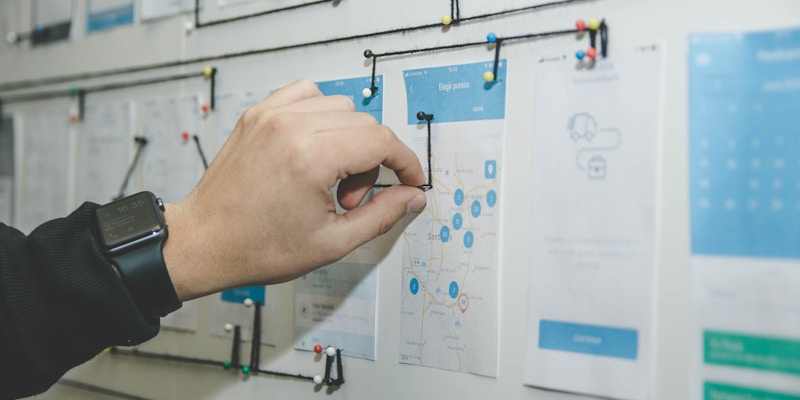
If you are a team lead in a growing software business, you have probably felt this pattern. Sprint planning starts strong. The backlog is groomed. The stand ups are crisp. The team is shipping. Then the wheels start to wobble.
A few urgent support tickets land mid sprint. QA finds issues late, again. A client asks for “one small change†that is never small. A delivery lead wants a clean view of risk and capacity, but the truth is scattered across a software platform, a spreadsheet, a chat thread, a timesheet tool, and someone’s inbox.
Suddenly your sprint is still moving, but it is not moving forward. It’s moving sideways.
This article is for CTOs, CIOs, project managers, delivery leads and heads of DevOps in enterprise level dev agencies and product companies who are scaling and feel that visibility and control are slipping just as the stakes get higher.
The real problem is not Agile
Agile is rarely the culprit. The real problem is the system around the team.
As you scale from one or two squads to multiple dev teams, the delivery system becomes a workflow maze. Most organisations do not choose that maze deliberately. It forms naturally when tools are added one at a time to solve immediate pain.
One tool for sprint planning. Another for service tickets. Another for CRM. Another for time tracking. Another for billing. Another for reporting.
Individually, each tool makes sense. Collectively, they create blind spots.
This shows up in the data too. According to the 17th State of Agile Report by Digital.ai, respondents who were not satisfied with Agile adoption most commonly pointed to “too many mixed systems†forcing hybrid approaches, and they also flagged siloed teams causing delays.
That is exactly what most delivery leaders are fighting. Not a methodology problem, but a system integration problem.
Three common pitfalls that kill sprint momentum
1. Siloed tools create “invisible workâ€
Work gets done in places that do not talk to each other.
A developer updates the sprint board. QA logs defects elsewhere. Support tickets sit in a different system. Client requests live inside email threads. Time is tracked after the fact, if it is tracked at all.
When work is invisible, it is also ungoverned. That is when scope creep feels like it came out of nowhere, even though it arrived in small pieces over many days.
2. Handoffs break between PM, QA, DevOps and the client
Handoffs are where speed is won or lost.
QA needs context to test properly. PMs need real time status to manage risk. DevOps needs clean release readiness signals. Clients need clear communication about what is done, what is next, and what is blocked.
When those handoffs rely on manual updates, status meetings, or “just check the chatâ€, you end up with two version of reality. The optimistic one and the accurate one.
3. Poor time tracking distorts delivery decisions
Time tracking is not just about invoicing. It is about delivering truth.
When time is logged late, or inconsistently, you lose the ability to answer basic questions with confidence:
- Are we on budget for this sprint?
- Which epics are consuming the most effort?
- Where are we bleeding time on rework?
- Is this client profitable at the feature level, or only in aggregate?
In professional services, a meaningful amount of billable work never reaches an invoice, often because time is recorded too late or not consistently.
If you run a dev agency, that leakage is very real. It comes straight off the bottom line.
The cost of scattered workflows is bigger than delays
Delays are the visible symptom. The bigger cost is compounding chaos.
Delivery becomes unpredictable
Estimating gets harder because the data is incomplete and the work is fragmented.
Rework quietly takes over
Late defects and misunderstood requirements pull capacity away from planned sprint goals.
Client trust erodes
Not because teams are not working hard, but because clients experience uncertainty. Uncertainty feels like risk.
Leaders start managing by escalation
Without clear visibility, escalations become the norm rather than the exception, and that wears teams down fast.
This is all happening while teams are already overloaded by co-ordination work. Asana’s research has reported that knowledge workers spend a majority of their time on “work about workâ€, chasing updates, switching tools and coordinating, rather than executing.
Software teams feel this sharply because they also have to protect focused time for deep work.
What a unified dev workflow should look like
At enterprise scale, a delivery system should let you move from idea to invoice without breaking the chain of context.
That means four things must be connected:
Project delivery
Backlogs, tasks, milestones, dependencies, ownership and delivery reporting.
Service and support
Tickets that can be linked to clients, products and projects, with proper SLA visibility where needed.
Client and commercial context
CRM visibility so delivery teams understand who the client is, what was promised and what is changing.
Time tracking and billing
Effort captured at the task and ticket level, with billable and non billable clarity, so reporting and invoicing reflect reality.
When these live in separate silos, leaders pay a tax in the form of meetings, manual updates, duplicated data and missed context. When they live in one connected platform, the system starts doing the coordination for you.
Where Chronodesk fits in for dev and consulting teams
Chronodesk is built for organisations that run project delivery and client service in parallel, which is exactly how most dev agencies and enterprise delivery teams operate.
Instead of treating projects, Service Desk, CRM and time tracking as separate worlds, Chronodesk connects them. The outcome is simple: fewer handoffs, fewer blind spots and less admin required to get an accurate view.
Spotlight feature: real time task visibility plus billable hour tracking
For delivery leads, the value is in the combination.
Real time task visibility means you can see what is moving, what is blocked, and where work is accumulating across teams without waiting for a weekly status roll up.
Billable hour tracking attached to the actual work means you can connect effort to outcomes. Not only at month end. In the sprint.
This is what unlocks better decisions:
- Should we adjust the scope now, while it is still cheap?
- Do we need more QA capacity next sprint?
- Is support load consistently disrupting planned delivery?
- Which client requests are consuming effort without corresponding commercial alignment?
When your system can answer these quickly, your sprints stop losing speed.
A practical workflow audit you can do this week
This is the part we really want you to try.
Run a 45 minute workflow audit with your delivery leadership group and keep it brutally simple.
Step 1: Map your delivery chain in one line
Write this on a whiteboard:
Lead or request → backlog → dev → QA → release → support → invoice
Now list the tools used at each stage.
Step 2: Mark every handoff that requires manual re entry
If someone has to copy and paste information, recreate a task, or re-explain context, mark it.
Those are your integration bottlenecks.
Step 3: Identify where “work goes to dieâ€
Ask one question: where do tasks sit when nobody is sure who owns the next step?
Common answers are QA queues, waiting for client feedback, waiting for sign off, or support triage.
Step 4: Trace time tracking back to the source
Pick one project and one sprint.
Where is time captured today? How late is it captured? Is it linked to tasks and tickets, or is it general?
If it is general, your reporting is guesswork.
Step 5: Choose one fix that removes friction, not one that adds process
The best workflow improvement is usually a connection, not a new meeting.
Connect the work to the client record. Connect the ticket to the project. Connect the time entry to the task.
Then measure what changes over the next two sprints.
Key takeaway
When sprints lose speed, it is rarely because your teams forgot how to build software.
It is because your delivery system is forcing them to fight the tools, chase context and patch gaps between projects, support and billing.
If you want agile project visibility at scale, focus less on ceremonies and more on workflow design. Reduce mixed systems. Close handoff gaps. Make time and delivery data real time.
That is how you keep momentum without chaos.